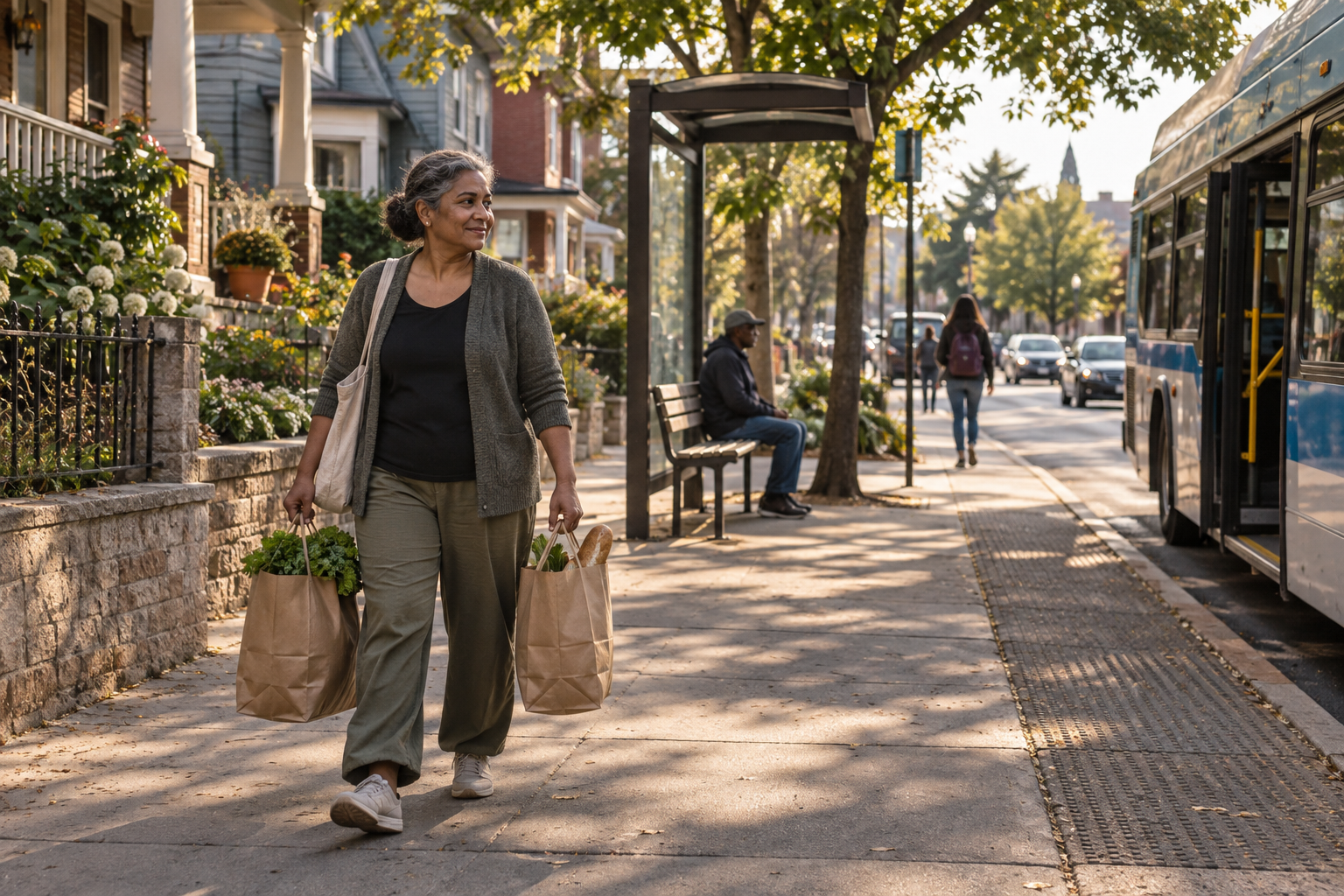
Advice about wellbeing often begins with something you can do: rest more, move, eat differently, reach out or build a routine. Those ideas may be useful in the right circumstances. But a choice is never made in empty space. Time, money, safety, relationships, work, services and the places we live all affect what is possible.
That is why a difficult period cannot be explained simply as a failure to make better choices. Nor does recognizing wider conditions mean personal actions are meaningless. A fuller picture holds both together: what someone can influence and what requires support or change beyond one person.
The World Health Organization describes wellbeing as a daily-life resource shaped by social, economic and environmental conditions. The OECD considers material conditions, quality of life, relationships and inequalities when it measures wellbeing across populations. These broad frameworks help us ask better questions; they do not tell us what caused any one person’s experience. [1][2]
The conditions around a choice
Time and work
A suggestion to rest earlier means something different to a person with a predictable schedule than to someone working changing shifts or caring for a relative at night. Work demands, travel time, paid leave and the ability to make time for care shape the options available. The same idea may need a different form—or may not be feasible now.
Money and material security
Food, housing, transport and access to services all have costs. A person may know what they would like to do and still lack the resources to do it consistently. The OECD includes income, housing and work among the material conditions in its framework; these are part of the wellbeing picture, not background details to ignore. [2]
Relationships and care
Support can make a demanding time more manageable. Relationships can also bring responsibilities, conflict or unequal care. A parent, partner, friend or neighbor may be an important source of help without being able to replace paid services or a safer environment. It is possible to value a relationship and need more support at the same time.
Services, access and safety
Advice to “get help” depends on whether appropriate help is available, affordable, accessible, trustworthy and safe to use. The same is true of a place to move, rest, learn or connect. Disability access, discrimination and the design of services can affect a person’s choices. WHO’s social-determinants work looks at living and working conditions and the wider forces shaping them. [3]
Place and wider systems
Neighborhoods, public spaces, climate conditions, transport and policies shape daily life. These influences vary across places and people; there is no single story for a community or region. A useful wellbeing article should leave room for local context instead of assuming that everyone has the same resources, safety or responsibilities.
Why the layers connect
Consider an illustrative situation: someone wants to cook more often but arrives home late, has limited money for groceries and is caring for another person. A recipe might still help. So might reliable transport, enough income, a flexible schedule or practical care support. The difficulty is not contained in a single habit.
Or imagine someone hoping to spend more time with friends while managing a health concern and inaccessible transport. A suggestion to “reach out” may be kind, but access and support matter to whether that suggestion can become a real meeting. These examples are possibilities, not diagnoses or predictions about a particular reader.
WHO describes the social determinants of health as conditions in which people are born, grow, work, live and age, shaped by wider economic, social and political forces. That is health-focused public evidence. Combined with the wider WHO and OECD wellbeing framing, it supports taking conditions seriously when discussing wellbeing, while keeping the limits of each source clear. [1][2][3]
Where does responsibility belong?
An individual may choose an action that fits the day: asking for help, using an available service, adjusting a routine or making a decision about a relationship. Friends, family, employers, service providers, communities and governments also shape the support and conditions people can access. Responsibility is shared unevenly, and some barriers cannot be solved by personal effort.
A useful question is: “What is within reach for this person, and what would need to change around them?” This is a way to think more clearly, not a self-assessment or a command to take action. It can help an article avoid blaming someone for a limit they did not choose.
For Whole & Steady, this means presenting practical ideas with their conditions attached. A habit guide can offer options without promising that a habit fixes insecure housing. A sleep article can acknowledge work and care schedules. A relationship article can distinguish communication from safety. The advice should be flexible enough to respect the life in which it would be used.
A steadier way to use wellbeing advice
When you read a suggestion, ask whether it fits your time, resources, abilities and responsibilities. Keep what is useful. Adapt or set aside what does not fit. If the real need is professional care, practical assistance, a safer situation or collective change, another personal routine is not the whole answer.
You do not need to choose between caring for yourself and recognizing the conditions around you. Both belong in the picture. A small action can be worthwhile without being made responsible for everything.
When information is not enough
Whole & Steady provides general education, not an assessment of your circumstances or a personal treatment plan. If a health or safety concern is persistent, worsening, interfering with daily life or beyond general information, speak with an appropriately qualified professional or service. For an urgent concern, seek appropriate local emergency or crisis help. Our articles and Contact form are not emergency services.
Frequently asked questions
Do personal habits still matter?
They can. Their usefulness depends on circumstances, and they cannot remove every barrier. Avoid treating a suggestion that does not fit as proof of personal failure.
What are social determinants of health?
WHO uses the term for the living and working conditions and wider forces that shape health. This article uses that evidence alongside broader wellbeing frameworks; it does not claim the two concepts are identical. [3]
Can one person change wider conditions?
Sometimes an individual can ask for support, join with others or use an available service. Many changes also depend on organizations, communities and public decisions. The answer varies by issue and place.
Related reading
Sources
- World Health Organization — Promoting well-being. Broad public-health framing and social, economic and environmental conditions.
- OECD — Measuring well-being and progress. Material conditions, quality of life, relationships and inequalities.
- World Health Organization — Social determinants of health. Living and working conditions and wider forces shaping health.