A practical starting point for activity that suits your circumstances
The word exercise can bring to mind a gym, a running plan or a demanding routine. Physical activity is broader than that. It can happen while travelling, working, playing or doing everyday tasks, as well as during planned recreation. The useful starting question is not which routine everyone else follows. It is what kind of movement is possible, safe and worthwhile for you.
The World Health Organization (WHO) says that all physical activity counts and that some is better than none. That does not mean you need to force activity into an already overloaded day or ignore pain and limitations. It means a starting point can be smaller and more varied than a formal workout.
Notice what is already part of your day
Think about how you move now. That may include walking or wheeling to a destination, carrying out household tasks, gardening, playing, dancing or a planned activity. Some of those activities may feel pleasant; others may be tiring work. You do not need to turn every chore into a fitness goal. Notice what feels available and what you might want more of.
You may also notice barriers: an unsafe route, heat, inaccessible facilities, time, cost, care duties or fatigue. WHO recognizes that social, environmental and economic conditions affect opportunities to be active. Those conditions are real constraints, not a lack of motivation.
Choose a form you can return to
If you want to add movement, consider an activity you can access and that suits your ability and interests. It might be a short walk, wheelchair rolling, swimming, a class, dancing at home, or another form of active recreation. You can choose whether company, privacy, indoor space or an outdoor setting makes it easier. There is no requirement to enjoy the same activity as someone else.
The Centers for Disease Control and Prevention (CDC) recommends choosing activities you enjoy and that match your abilities. You can begin gently and build gradually if that is appropriate for you. Instead of promising to follow a perfect weekly schedule, try one feasible opportunity and notice how it goes.
Make room for different ways to move
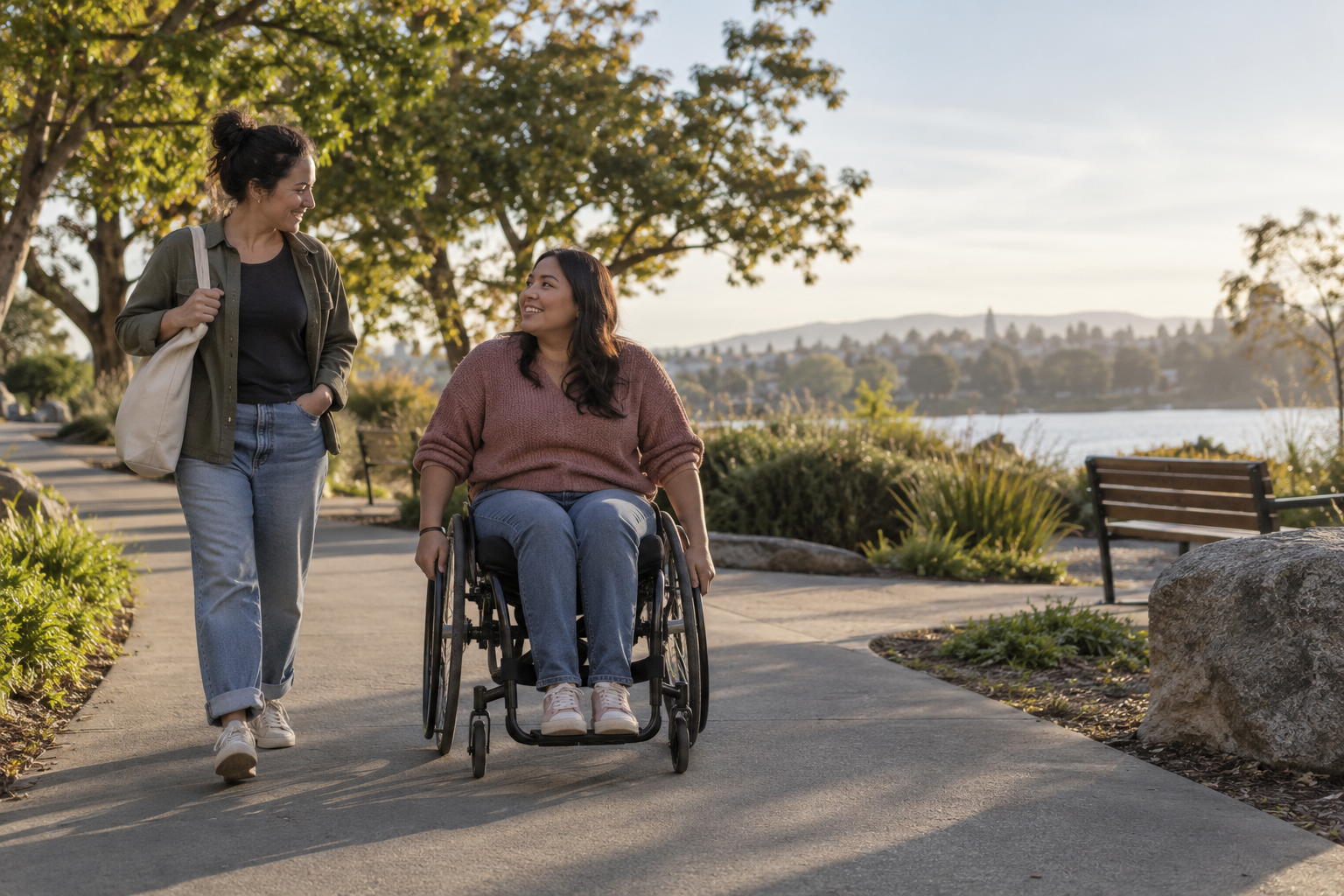
Movement is not measured by a single body type, speed or equipment choice. Walking is one option; wheeling or other adapted activities can be options too. People living with disabilities and chronic conditions can benefit from activity, but the right type and amount depend on the person. Accessibility, support and a suitable environment may make the difference between a useful option and one that is out of reach.
If an example does not suit you, replace it. A seated or supported activity, a shorter bout, or an activity planned with a professional may fit better. This guide cannot determine which adaptation is safe for an individual.
Let the plan change with your life
Some weeks have more room than others. Work shifts, illness, caregiving and changing energy can alter what is practical. If a chosen activity stops fitting, ask what changed: access, enjoyment, schedule, safety or health? Then choose a different opportunity or pause and reassess. A missed session does not erase the value of earlier movement.
General adult activity guidelines describe longer-term amounts and include muscle-strengthening activity, but they are not a pass-or-fail test for starting. WHO emphasizes that any amount is better than none. For this introduction, the next useful step is to find a safe form you can try and adjust, with professional guidance when your situation calls for it.
Know when to get individual guidance
If you have a chronic condition, disability, injury, pregnancy-related concern, or symptoms that make movement uncertain, ask a qualified health professional or physical activity specialist about suitable activities and amounts. The CDC specifically advises people with chronic conditions or disabilities to seek advice on appropriate options. If activity causes concerning symptoms, stop and seek medical advice rather than pushing through them. This article does not diagnose symptoms or provide a rehabilitation plan.
Continue exploring
For a broader starting point, read “Where to Begin With Your Wellbeing.”